Surfood (Sustainable Urban Food System)
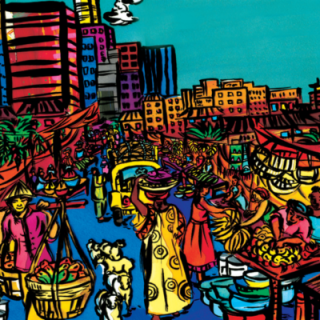
In response to growing urbanization and the excesses of the agro-industrial model, SURFOOD (Sustainable Urban Food Systems) is a research program coordinated by the UNESCO Chair on World Food Systems. It is based on the premise that cities—by virtue of the resources, diversity, and innovations they concentrate (such as urban agriculture, short supply chains, and new dining models)—serve as a key lever for transforming our food systems.
The project has brought together and spearheaded research into the evolution of urban food systems to support the transition toward more sustainable food practices.
You can view the list of partners involved and the initiatives undertaken on the project website.
Objectives
- Unite and stimulate research on the transformation of urban food systems.
- Promote a holistic approach to food sustainability, integrating environmental, nutritional, social, cultural, and economic dimensions.
- Explore urban food models that respect biodiversity, are accessible to all, and are adapted to local cultural contexts.
- Leverage local expertise and resources while fostering employment and the resilience of food systems in the face of contemporary challenges.
ROLE OF THE CHAIR
With the support of Agropolis Fondation, the Chair coordinated the development of this multidisciplinary "flagship" research program on the sustainability of urban food systems.
The program brought together twenty research teams from Montpellier, Marseille, Lyon, Rabat, Hanoi, and Dakar. The Chair handled scientific coordination, technical management, and the dissemination of project results, enabling the local scientific community to organize itself and gain greater visibility in this field.
Notably, the project led to the publication of a scholarly book on the development of urban food policies, released by Éditions Quae in 2017. An English translation, published by Springer as an open-access title, appeared in 2019.
Building on the work of SURFOOD, the Chair coordinated the development of the FOODSCAPE project (analyzing the effect of the foodscape—the urban food environment—on the dietary habits of urban consumers) and the URBAL project (analyzing the sustainability impact of various social innovations related to urban food).