 Chaire UNESCO Alimentations du monde
This chapter presents the general framework for the URBAL project as well as the main interwoven considerations and approaches that are the backbone of the methodology. Please note that this is an ongoing project and that it has evolved since the chapter has been written. We will point out some changes in the methodology as the chapter proceeds
Accueil > Mots-clés > Langue > Anglais
Anglais
Articles
-
 An emerging user-led participatory methodology : Mapping impact pathways of urban food system sustainability innovations
23 novembre 2021, par Mathilde COUDRAY -
 Power at the table : food fights and happy meals
26 octobre 2021, par Mathilde COUDRAYIn family meals the normative and the performative are very far apart—though everyone likes to think of the family table as a place of harmony and solidarity, it is often the scene for the exercise of power and authority, a place where conflict prevails. My interest in this topic was sparked by research on middle-class parents’ struggles with their “picky eater” children. Besides narrating the way the dinner table became battleground with their own children, many parents also recalled their own childhood family meals as painful and difficult. From this very narrow focus on family struggles, I expand the discussion to the larger question of why this topic is relatively ignored in social science, and I question the sources of the normative power of the family “happy meal.” The ideological emphasis on family dinners has displaced social responsibility from public institutions to private lives, and the construction of normative family performances is part of a process that constructs different family types as deviant and delinquent.
-
 2020 Global Nutrition Report
26 octobre 2021, par Mathilde COUDRAYThe 2020 Global Nutrition Report looks beyond global and national patterns, revealing significant inequalities in nutrition outcomes within countries and populations. Based on the best-available data, in-depth analysis and expert opinion rooted in evidence, the report identifies critical actions to achieve nutrition equity. Everyone deserves access to healthy, affordable food and quality nutrition care.
-
 The global distribution of acute unintentional pesticide poisoning : estimations based on a systematic review
26 octobre 2021, par Mathilde COUDRAYHuman poisoning by pesticides has long been seen as a severe public health problem. As early as 1990, a task force of the World Health Organization (WHO) estimated that about one million unintentional pesticide poisonings occur annually, leading to approximately 20,000 deaths. Thirty years on there is no up-to-date picture of global pesticide poisoning despite an increase in global pesticide use. Our aim was to systematically review the prevalence of unintentional, acute pesticide poisoning (UAPP), and to estimate the annual global number of UAPP.
We carried out a systematic review of the scientific literature published between 2006 and 2018, supplemented by mortality data from WHO. We extracted data from 157 publications and the WHO cause-of-death database, then performed country-wise synopses, and arrived at annual numbers of national UAPP. World-wide UAPP was estimated based on national figures and population data for regions defined by the Food and Agriculture Organization (FAO). -
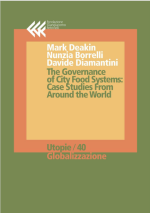 The governance of city food systems : case studies from around the world
23 novembre 2021, par Mathilde COUDRAYThis book brings together eight papers on the governance of city food systems. As case studies, they examine the governance of city food systems in Milan, Belo Horizonte, Vancouver, Edinburgh, Bristol, Bangkok, Jakarta and Singapore.
-
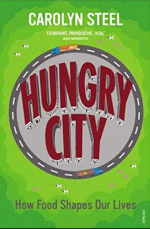 Hungry city. How food shapes our lives
26 octobre 2021, par Mathilde COUDRAYHow do you feed a city ? It’s a question that we rarely ask, but which lies at the core of civilisation. The feeding of cities arguably has a greater social and physical impact on us and our planet than anything else we do. Yet few of us living in modern cities are conscious of the process. Food arrives on our plates as if by magic, and we rarely stop to wonder how it might have got there.
-
 Should we go “home” to eat ? : toward a reflexive politics of localism
3 novembre 2021, par Mathilde COUDRAY“Coming home to eat” [Nabhan, 2002. Coming Home to Eat : The Pleasures and Politics of Local Foods. Norton, New York] has become a clarion call among alternative food movement activists. Most food activist discourse makes a strong connection between the localization of food systems and the promotion of environmental sustainability and social justice. Much of the US academic literature on food systems echoes food activist rhetoric about alternative food systems as built on alternative social norms. New ways of thinking, the ethic of care, desire, realization, and vision become the explanatory factors in the creation of alternative food systems. In these norm-based explanations, the “Local” becomes the context in which this type of action works. In the European food system literature about local “value chains” and alternative food networks, localism becomes a way to maintain rural livelihoods. In both the US and European literatures on localism, the global becomes the universal logic of capitalism and the local the point of resistance to this global logic, a place where “embeddedness” can and does happen. Nevertheless, as other literatures outside of food studies show, the local is often a site of inequality and hegemonic domination. However, rather than declaim the “radical particularism” of localism, it is more productive to question an “unreflexive localism” and to forge localist alliances that pay attention to equality and social justice. The paper explores what that kind of localist politics might look like.
-
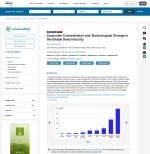 Corporate concentration and technological change in the global seed industry
26 octobre 2021, par Mathilde COUDRAYIn the past three decades, the seed sector has experienced, and is now again experiencing, corporate concentration trends. The fallout of this consolidation is the subject of numerous concerns. However, the seed sector is rather poorly understood. Thus, it is useful to understand it better and to investigate the potential impact on the agri-food chain of the trend toward increased corporate concentration. The first part of this paper presents the main characteristics of the global seed sector, its stakeholders, and its size in the agri-food chain. Next, the corporate consolidation trends of the seed industry over the past two years are examined. The technological evolution of the seed sector is also briefly presented. In the last part of this paper, the fallout of recent mergers and acquisitions in the seed industry are analyzed. Opposing views are expressed on the impact of these mergers and acquisitions in the agri-food chain : while certain stakeholders worry about the risk of food power by the biggest companies, some others expect useful innovations.
-
 What’s on the menu ? A global assessment of MUFPP signatory cities’ food strategies. Agroecology and Sustainable Food Systems
23 novembre 2021, par Mathilde COUDRAYIncreased recognition of the persistent and interconnected nature of food system challenges resulted in the creation of the Milan Urban Food Policy Pact (MUFPP) in 2015. MUFPP signatory cities commit themselves to contribute to a better functioning food system by adopting integrated approaches. This study assesses the number of MUFPP cities that have developed food strategies and the choices local policymakers make in the design of these strategies. The results show surprising similarities between cities across regions in terms of goals and instruments. At the same time, local governments clearly put different emphases and seem to vary in policy styles.
-
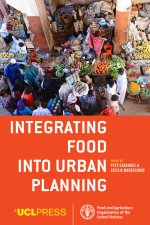 Integrating food into urban planning
23 novembre 2021, par Mathilde COUDRAYThe integration of food into urban planning is a crucial and emerging topic. Urban planners, alongside the local and regional authorities that have traditionally been less engaged in food-related issues, are now asked to take a central and active part in understanding how food is produced, processed, packaged, transported, marketed, consumed, disposed of and recycled in our cities.