 Unesco Chair in World #Food Systems
This paper addresses the question of how technological transitions (TT) come about ? Are there particular patterns and mechanisms in transition processes ? TT are defined as major, long-term technological changes in the way societal functions are fulfilled. TT do not only involve changes in technology, but also changes in user practices, regulation, industrial networks, infrastructure, and symbolic meaning or culture. This paper practices ‘appreciative theory’ [R.R. Nelson, S.G. Winter, An Evolutionary Theory of Economic Change, Bellknap Press, Cambridge, MA, 1982] and brings together insights from evolutionary economics and technology studies. This results in a multi-level perspective on TT where two views of the evolution are combined : (i) evolution as a process of variation, selection and retention, (ii) evolution as a process of unfolding and reconfiguration. The perspective is empirically illustrated with a qualitative longitudinal case-study, the transition from sailing ships to steamships, 1780–1900. Three particular mechanisms in TT are described : niche-cumulation, technological add-on and hybridisation, riding along with market growth.
Home > Keywords > Langue > Anglais
Anglais
Articles
-
 Technological transitions as evolutionary reconfiguration processes : a multi-level perspective and a case-study
23 novembre 2021, par Mathilde COUDRAY -
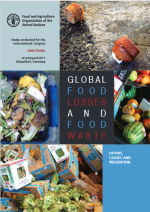 Global food losses and food waste – Extent, causes and prevention
3 novembre 2021, par Mathilde COUDRAYThe study highlights the losses occurring along the entire food chain, and makes assessments of their magnitude. Further, it identifies causes of food losses and possible ways of preventing them.
-
 Recycling, recovering and preventing “food waste” : competing solutions for food systems sustainability in the United States and France
3 novembre 2021, par Mathilde COUDRAYDrawing on a distinction between “weak” and “strong” sustainability, this paper argues that “strong” prevention based on holistic changes in the food system is the most sustainable solution to food surplus and waste. It suggests that academics focus on strong food surplus prevention, but also that advocates encourage government and corporate actors to differentiate between weak and strong actions to diffuse strong sustainability across organizations and countries.
-
 Urban governance for food security : the alternative food system in Belo Horizonte
23 novembre 2021, par Mathilde COUDRAYWith a population of 2.5 million people, the city of Belo Horizonte, Brazil, is a world pioneer in tackling food consumption, distribution and production as components of an integrated urban policy for food security. The paper gives a description of the main programmes and features of this policy arguing that over 15 years the city and its Municipal Secretariat for Food Policy and Supply have built a particular alternative food system. Marked by the comprehensive scope of its programmes ; its urban/rural focus ; the flexibility of the initiatives and, above all, by its commitment to social justice and equitable access to food, Belo Horizonte has developed a distinct mode of governance for food security. The unique ‘alterity’ of this food system is set further apart from those being attempted in Europe and in North America because it is government-driven. The paper discusses its strengths and current challenges.
-
 Guidelines on food fortification with micronutrients
3 novembre 2021, par Mathilde COUDRAYThe guidelines are written from nutrition and public health perspective, to provide practical guidance on how food fortification should be implemented, monitored and evaluated. They are primarily intended for nutrition-related public health programme managers, but should also be useful to all those working to control micronutrient malnutrition, including the food industry.
-
 Convergence and divergence in food consumption ? Culture, Class and Place in Malaysian Urbanscape. - Anindita Dasgupta
22 décembre 2017, par RoxaneAnindita Dasgupta is Associate Professor, and Head of School, School of Liberal Arts & Sciences, at Taylor’s University, Malaysia. She is the Book Review Editor for Millennial Asia : An International Journal of Asian Studies.
-
 Avoiding the local trap : scale and food systems in planning research
3 novembre 2021, par Mathilde COUDRAYA strong current of food-systems research holds that local food systems are preferable to systems at larger scales. Many assume that eating local food is more ecologically sustainable and socially just. We term this the local trap and argue strongly against it. We draw on current scale theory in political and economic geography to argue that local food systems are no more likely to be sustainable or just than systems at other scales. The theory argues that scale is socially produced : scales (and their interrelations) are not independent entities with inherent qualities but strategies pursued by social actors with a particular agenda. It is the content of that agenda, not the scales themselves, that produces outcomes such as sustainability or justice. As planners move increasingly into food-systems research, we argue it is critical to avoid the local trap. The article’s theoretical approach to scale offers one way to do so.
-
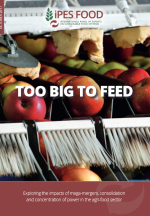 Too big to feed. Exploring the impacts of mega-mergers, consolidation and concentration of power in the agri-food sector
26 octobre 2021, par Mathilde COUDRAYWhat is corporate concentration, why does it matter for food security, and who are the biggest corporate players in each agrifood sector/"link" in the Industrial Food Chain ?
-
 Understanding Lived Experience of Food Environments to Inform Policy : An Overview of Research Methods
10 novembre 2021, par Mathilde COUDRAYWith poor diets being the leading cause of ill-health in the world today, the imperative to explore how to leverage food systems for better diets has never been greater. Significant attention has been placed on how to improve one particular component of the food system : food environments. Food environments comprise the foods available to people in their surroundings as they go about their everyday lives and the nutritional quality, safety, price, convenience, labelling and promotion of these foods (FAO, 2016).
-
 Does participating in community gardens promote sustainable lifestyles in urban settings ? Design and protocol of the JArDinS study.
10 novembre 2021, par Mathilde COUDRAYDespite growing evidence for the multiple health benefits of community gardening, longitudinal studies based on quantitative data are needed. Here we describe the protocol of JArDinS, a quasi-experimental study, aimed at assessing the impact of community garden participation (a natural experiment) in the adoption of more sustainable lifestyles.