 Unesco Chair in World #Food Systems
In 1971, Diet for a Small Planet broke new ground, revealing how our everyday acts are a form of power to create health for ourselves and our planet. This extraordinary book first exposed the needless waste built into a meat-centered diet. Now, in a special edition for its 50th anniversary, world-renowned food expert Frances Moore Lappé goes even deeper, showing us how plant-centered eating can help restore our damaged ecology, address the climate crisis, and move us toward real democracy. Sharing her personal journey and how this revolutionary book shaped her own life, Lappé offers a fascinating philosophy on changing yourself—and the world—that can start with changing the way we eat.
Home > Keywords > Dimension de l’alimentation > Environnementale
Environnementale
Articles
-
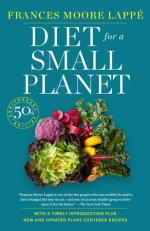 Diet for a small planet
3 novembre 2021, par Mathilde COUDRAY -
 Food swamps predict obesity rates better than food deserts in the United States
3 novembre 2021, par Mathilde COUDRAYThis paper investigates the effect of food environments, characterized as food swamps, on adult obesity rates. Food swamps have been described as areas with a high-density of establishments selling high-calorie fast food and junk food, relative to healthier food options. This study examines multiple ways of categorizing food environments as food swamps and food deserts, including alternate versions of the Retail Food Environment Index. We merged food outlet, sociodemographic and obesity data from the United States Department of Agriculture (USDA) Food Environment Atlas, the American Community Survey, and a commercial street reference dataset. We employed an instrumental variables (IV) strategy to correct for the endogeneity of food environments (i.e., that individuals self-select into neighborhoods and may consider food availability in their decision). Our results suggest that the presence of a food swamp is a stronger predictor of obesity rates than the absence of full-service grocery stores. We found, even after controlling for food desert effects, food swamps have a positive, statistically significant effect on adult obesity rates. All three food swamp measures indicated the same positive association, but reflected different magnitudes of the food swamp effect on rates of adult obesity (p values ranged from 0.00 to 0.16). Our adjustment for reverse causality, using an IV approach, revealed a stronger effect of food swamps than would have been obtained by naïve ordinary least squares (OLS) estimates. The food swamp effect was stronger in counties with greater income inequality (p < 0.05) and where residents are less mobile (p < 0.01). Based on these findings, local government policies such as zoning laws simultaneously restricting access to unhealthy food outlets and incentivizing healthy food retailers to locate in underserved neighborhoods warrant consideration as strategies to increase health equity.
-
 Poiscaille, un circuit court des produits de la mer au service de la pêche durable ?
25 mars 2020, par Mathilde COUDRAYTélécharger la vidéo de Marielle
Poiscaille est un service de vente en ligne de produits de la mer issus de circuits courts, inspiré par les associations pour le maintien d’une agriculture paysanne (AMAP) à son fondateur, Charles Guirriec, ingénieur halieute. Poiscaille propose de s’abonner à un « casier de la mer », déclinaison marine du « panier de légumes ». Ce casier est composé de poissons et/ou coquillages achetés directement à des « petits pêcheurs » français et distribué via un (…) -
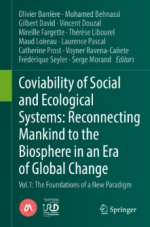 Coviability of Social and Ecological Systems : Reconnecting Mankind to the Biosphere in an Era of Global Change Vol.1 : The Foundations of a New Paradigm
27 octobre 2021, par Mathilde COUDRAYPuts forward a new concept to analyse the man-nature relationship. Offers governance solutions to face the ecological emergency. Provides a unique view on environmental change using inter- and transdisciplinary approaches.
-
 Mieux nourrir la planète : diversifier les cultures pour construire des systèmes alimentaires durables
15 juin 2022, par Mathilde COUDRAYAujourd’hui, d’importantes mutations de l’agriculture mondiale sont nécessaires pour produire suffisamment d’aliments sains pour tous, tout en préservant la qualité des terres, de l’air et de l’eau et en sauvegardant la biodiversité. Mais produire suffisamment et préserver en même temps l’environnement est une équation particulièrement complexe à résoudre. Les pratiques agroécologiques, dont un principe essentiel est l’usage de la biodiversité cultivée, constituent une voie prometteuse pour assurer ces mutations.
-
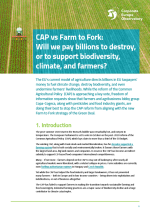 CAP vs Farm to Fork : Will we pay billions to destroy, or to support biodiversity, climate, and farmers ?
27 octobre 2021, par Mathilde COUDRAYThe EU’s current model of agriculture directs billions in EU taxpayers’ money to fuel climate change, destroy biodiversity, and even undermine farmers’ livelihoods. While the reform of the Common Agricultural Policy (CAP) is approaching a key vote, freedom of information requests show that farmers and agribusiness lobby group Copa-Cogeca, along with pesticides and food industry giants, are doing their best to stop the CAP reform from aligning with the new Farm to Fork strategy of the Green Deal.
-
 Wendkouni Mireille Yameogo
15 septembre 2021, par Mathilde COUDRAYDiffusion d’un activeur de compost en milieu paysan au Burkina Faso. Au Burkina Faso, l’agriculture et l’élevage sont les principales activités des populations rurales. Les sols agricoles sont majoritairement peu fertiles, ce qui est l’une des principales causes de faible rendement. Green Cross Burkina Faso est une organisation non gouvernementale (ONG) œuvrant dans les domaines agricole et environnemental.
-
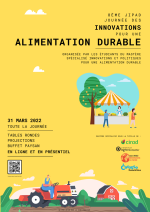 Près de Lyon, la station Vavilov sème la biodiversité alimentaire
8 avril 2022, par Mathilde COUDRAYÀ Charly, dans le Rhône, le centre d’expérimentation agronomique Vavilov sélectionne des variétés anciennes. Un des objectifs majeurs est d’étudier l’adaptation des végétaux aux effets du changement climatique : un enjeu crucial pour l’avenir de notre sécurité alimentaire. Ce projet débute dans les années 2010 suite à un partenariat avec l’Institut Vavilov de Saint-Pétersbourg. Il reprend l’idée originale du botaniste Vavilov, en l’élargissant aux nouveaux enjeux climatiques : une petite (…)
-
 Manon Plouchart
15 septembre 2021, par Mathilde COUDRAYLa stratégie de la criée de Quiberon autour de la valorisation du poisson ikejime et sa contribution potentielle à une pêche plus durable. Les criées, ou halles à marées, sont des acteurs publics structurants des littoraux français. Elles permettent à des professionnels de la pêche artisanale et industrielle de se rencontrer pour vendre et acheter la pêche du jour. Certaines criées, à l’image de celle de Quiberon, adoptent une stratégie propre leur permettant de défendre leur activité face à la concurrence de criées plus importantes.
-
 Systèmes agroalimentaires en transition
9 mai 2017, par ClarisseVers quel état caractéristique futur le système agroalimentaire actuel pourrait-il se diriger, ou devrait-il se diriger ? Par quel chemin, cette transition pourrait-elle ou devrait-elle s’opérer ?