 Chaire UNESCO Alimentations du monde
The concept of food system has gained prominence in recent years amongst both scholars and policy-makers. Experts from diverse disciplines and backgrounds have in particular discussed the nature and origin of the “unsustainability” of our modern food systems. These efforts tend, however, to be framed within distinctive disciplinary narratives. In this paper we propose to explore these narratives and to shed light on the explicit -or implicit- epistemological assumptions, mental models, and disciplinary paradigms that underpin those. The analysis indicates that different views and interpretations prevail amongst experts about the nature of the “crisis”, and consequently about the research and priorities needed to “fix” the problem. We then explore how sustainability is included in these different narratives and the link to the question of healthy diets. The analysis reveals that the concept of sustainability, although widely used by all the different communities of practice, remains poorly defined, and applied in different ways and usually based on a relatively narrow interpretation. In so doing we argue that current attempts to equate or subsume healthy diets within sustainability in the context of food system may be misleading and need to be challenged. We stress that trade-offs between different dimensions of food system sustainability are unavoidable and need to be navigated in an explicit manner when developing or implementing sustainable food system initiatives. Building on this overall analysis, a framework structured around several entry points including outcomes, core activities, trade-offs and feedbacks is then proposed, which allows to identify key elements necessary to support the transition toward sustainable food systems.
Accueil > Mots-clés > Maillon de la chaîne alimentaire > Système alimentaire
Système alimentaire
Articles
-
 When food systems meet sustainability – Current narratives and implications for actions
27 octobre 2021, par Mathilde COUDRAY -
 The practice and politics of food system localization
3 novembre 2021, par Mathilde COUDRAYAs an apparent counterpoint to globalization, food system localization is often assumed to be a good, progressive and desirable process. Such thinking rests on a local–global binary that merits closer scrutiny. This paper examines the social construction of “local”, by analyzing the practice and politics of food system localization efforts in Iowa, USA. It argues that desirable social or environmental outcomes may not always map neatly onto the spatial content of “local”, which itself involves the social construction of scale. These contradictions in turn relate to differing political inflections discernible in food system localization. Localization can be approached defensively, emphasizing the boundaries and distinctions between a culturally and socially homogeneous locality needing protection from non-local “others”. But through the experience of new social and gustatory exchanges, localization can also promote increased receptivity to difference and diversity. More emergent, fluid and inclusive notions of the “local”, however, may challenge the very project of crafting and maintaining distinctive food identities for local places. These themes are explored through a case study of food system localization efforts and activities in Iowa, an American state that has been a stronghold of conventional commodity agriculture. Demographic and agricultural histories are drawn on to understand recent food system localization practice that has come to emphasize a definition of “local” that coincides with sub-national state boundaries. The emergence and popularization of the “Iowa-grown banquet meal” and the shifting meaning of “local Iowa food” further illustrate the potential tension between defensiveness and diversity in food system localization.
-
 An emerging user-led participatory methodology : Mapping impact pathways of urban food system sustainability innovations
23 novembre 2021, par Mathilde COUDRAYThis chapter presents the general framework for the URBAL project as well as the main interwoven considerations and approaches that are the backbone of the methodology. Please note that this is an ongoing project and that it has evolved since the chapter has been written. We will point out some changes in the methodology as the chapter proceeds
-
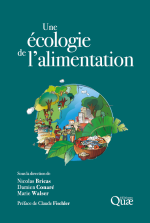 Les initiatives citoyennes et leur changement d’échelle
3 novembre 2021, par Mathilde COUDRAYOù l’on constate que le monde d’après s’expérimente déjà aujourd’hui, au travers d’initiatives citoyennes qui se multiplient et inventent de nouvelles façons d’organiser l’alimentation. Et où l’on explore plusieurs voies pour que ces initiatives changent d’échelle et permettent la nécessaire transformation des systèmes alimentaires.
-
 Jamais seul. Ces microbes qui construisent les plantes, les animaux et les civilisations
26 octobre 2021, par Mathilde COUDRAYNous savons aujourd’hui que les microbes ne doivent plus seulement être associés aux maladies ou à la décomposition. Au contraire, ils jouent un rôle en tous points essentiel : tous les organismes vivants, végétaux ou animaux, dépendent intimement de microbes qui contribuent à leur nutrition, leur développement, leur immunité ou même leur comportement. Toujours pris dans un réseau d’interactions microbiennes, ces organismes ne sont donc… jamais seuls. (présentation de l’éditeur)
-
 Toutes les vidéos de la JIPAD 2022
8 avril 2022, par Mathilde COUDRAY -
 2020 / Webinaires - Droit à l’alimentation
12 novembre 2020, par Mathilde COUDRAYLes 9 et 16 décembre 2020 se sont déroulés deux webinaires organisés par la Fondation Daniel et Nina Carasso et la Chaire Unesco Alimentations du monde sur les enjeux actuels de la lutte contre la précarité alimentaire et de l’égalité d’accès à une alimentation durable.
-
 2020 Global Nutrition Report
26 octobre 2021, par Mathilde COUDRAYThe 2020 Global Nutrition Report looks beyond global and national patterns, revealing significant inequalities in nutrition outcomes within countries and populations. Based on the best-available data, in-depth analysis and expert opinion rooted in evidence, the report identifies critical actions to achieve nutrition equity. Everyone deserves access to healthy, affordable food and quality nutrition care.
-
 The governance of city food systems : case studies from around the world
23 novembre 2021, par Mathilde COUDRAYThis book brings together eight papers on the governance of city food systems. As case studies, they examine the governance of city food systems in Milan, Belo Horizonte, Vancouver, Edinburgh, Bristol, Bangkok, Jakarta and Singapore.
-
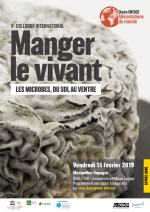 « Jamais seuls - ces microbes qui construisent les plantes, les animaux et les civilisations » - Marc-André Selosse
5 mars 2019, par Mathilde COUDRAYMarc-André Selosse, biologiste, Muséum national d’Histoire naturelle -
Longtemps associés aux maladies ou à la décomposition, les microbes sont aujourd’hui réhabilités. Qu’il s’agisse des micro-organismes du sol, du microbiote intestinal ou des différents ferments utilisés pour la transformation des aliments (bactéries, champignons, levures), les microbes sont essentiels au développement des animaux et végétaux, à leur nutrition, à leur système immunitaire, voire à leur comportement. Comment préserver cette diversité microbienne ? Quels rôles joue le microbiote intestinal sur notre santé ? Quels sont les secrets des aliments fermentés ? Comment nous définissons-nous par rapport à un univers microbien qui nous dépasse très largement en nombre ? Cette journée a cherché à rendre visible l’invisible...